For the purpose of this post, we will go over the emergence of Remote Viewing, known historical uses, and more importantly, emerging applications of RV in today's rapidly changing world.
"Psychic Remote Viewing" (often just called "remote viewing" or RV), a paranormal practice involving extrasensory perception (ESP) to gather information about distant or unseen targets. It's a fascinating (and controversial) topic with roots in parapsychology and government experiments.
What Is Remote Viewing?
Remote viewing is the alleged ability to perceive or describe details about a distant, hidden, or future target (like a location, object, or event) using only the mind, without relying on the five senses or logical deduction. Practitioners typically enter a relaxed, meditative state and sketch or describe impressions, often guided by coordinates or a "tasker" who provides minimal info to avoid cues. It's distinct from clairvoyance in its structured, protocol-based approach, emphasizing "non-local perception" (sensing beyond space and time).
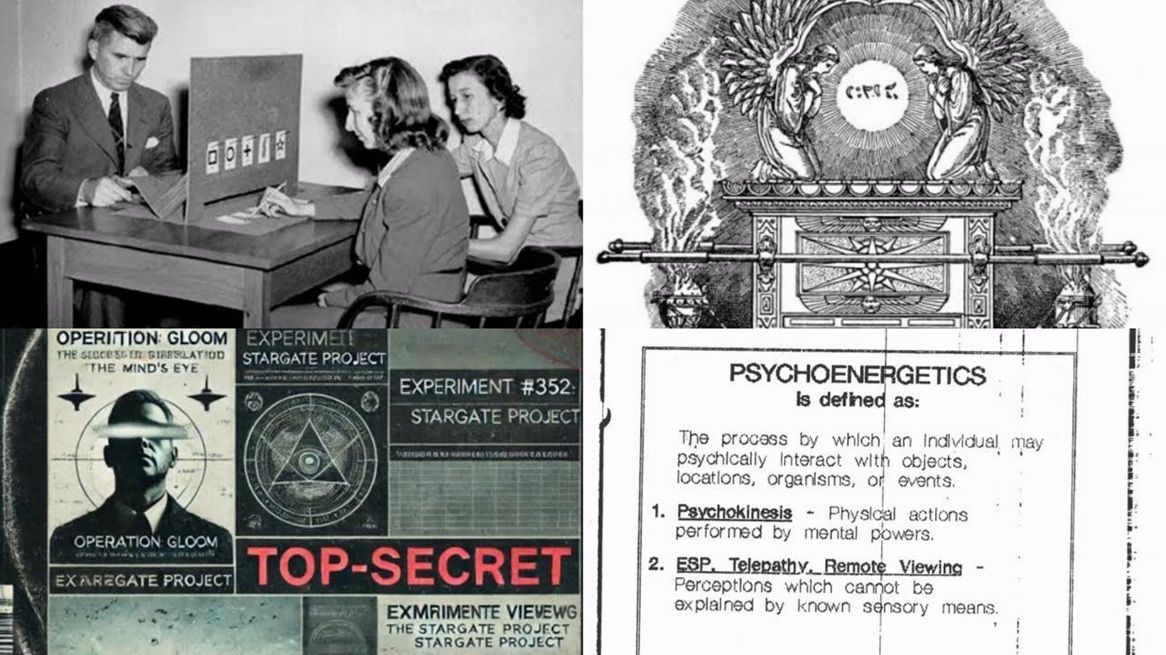
The practice gained traction in the 1970s through U.S. government-funded research, amid Cold War fears of Soviet "psychotronic" programs. Key labs included Stanford Research Institute (SRI, later SAIC) in California, where physicists like Russell Targ and Harold Puthoff developed protocols. The CIA's Project Stargate (1978–1995) was the most famous program, training "viewers" for intelligence tasks. A typical session might look like this illustration:
to the right.
Skeptics argue results stem from coincidence, cold reading, or flawed methodology, while proponents cite meta-analyses showing small but consistent effects above chance.
Deeper History of Remote Viewing
Remote viewing (RV) emerged in the early 1970s as part of parapsychological research amid Cold War tensions, where the U.S. intelligence community feared the Soviets were advancing in "psychotronic" warfare—using psychic abilities for espionage. The program began at the Stanford Research Institute (SRI) in Menlo Park, California, funded by the CIA, with physicists Russell Targ and Harold Puthoff leading experiments to test if individuals could describe distant locations using only mental focus. Key innovator Ingo Swann developed structured protocols like Coordinate Remote Viewing (CRV), which involved using random coordinates as "targets" to minimize sensory cues and bias.
By 1978, the program evolved into the U.S. Army's Project Stargate (initially under names like Grill Flame and Center Lane), a $20 million initiative running until 1995 at Fort Meade, Maryland. It trained military personnel and civilians in RV techniques for intelligence gathering, such as locating hostages or spying on foreign sites. Declassified documents reveal over 20 years of operations, involving about 20-30 viewers, with mixed results leading to its termination. Post-Stargate, RV transitioned to civilian uses, including archaeology, business forecasting, and personal development, with organizations like the International Remote Viewing Association (IRVA) promoting it today.
The program's history is marked by controversy: proponents highlight "hits" in controlled tests, while a 1995 CIA-commissioned review by the American Institutes for Research (AIR) concluded there was evidence of an anomalous effect but insufficient reliability for operational use. Skeptics, including magician James Randi and psychologist Ray Hyman, argued results stemmed from methodological flaws, like vague descriptions allowing post-hoc matching.
History and Government Involvement
- Origins (1970s): Started at SRI with experiments on artists and psychics. Ingo Swann coined the term "remote viewing" and helped refine methods to make it more scientific.
- Stargate Era (1978–1995): The U.S. military spent ~$20 million training viewers. Declassified docs show mixed results—some operational successes, but the program ended due to inconsistent reliability and budget cuts.
- Post-1995: A 1995 review by the American Institutes for Research (AIR) found evidence of an "anomalous" effect but recommended against use for intel due to low practical value. RV shifted to civilian applications like archaeology, business, and personal development.
- Recent Developments: A 2023 meta-analysis of 1974–2022 studies (covering ~1,225 sessions) found an overall effect size of 0.23 (small but significant), outperforming other ESP methods. A 2023 follow-up study with 347 participants showed no significant results, highlighting ongoing debate.
Examples Where It's Been Claimed Accurate
Accuracy is often measured by "hit rates" (e.g., matching descriptions to targets) or effect sizes (deviations from chance). Stargate and related programs documented several cases where RV provided accurate, actionable intelligence, often verified by subsequent reconnaissance. Success rates in lab settings hovered around 15-20% above chance, with some viewers achieving higher consistency. Here are key examples:
- Pat Price's Soviet Site (1974): In an SRI experiment, Price described a secret Soviet R&D facility in Semipalatinsk (using coordinates only), including cranes, spheres, and underground structures—later verified by satellite imagery. Accuracy was rated ~80%.
- Joe McMoneagle's Submarine (1979): A Stargate viewer, McMoneagle accurately sketched a massive Soviet Typhoon-class submarine under construction in a hidden building, including details like its size and missile tubes—confirmed months later by intel.
- Iranian Hostage Crisis (1980s): Viewers reportedly located hostages and described their conditions, aiding rescue planning (though the mission failed for other reasons).
- Archaeological Finds: Civilian uses include locating lost ships or artifacts; e.g., Stephan Schwartz's Mobius Group used RV to find ancient sites in Egypt and underwater wrecks, with ~70% hit rates in blind tests.
- Modern Replications: In a 2022 meta-analysis, expert viewers achieved 31.5% hits in 9,184 trials (vs. 25% chance), with p-values indicating extreme unlikelihood of chance. However, not all studies replicate this—critics note selection bias in positive reports.
Successful Examples and Uses:
- Pat Price's Soviet R&D Facility (1974): In an early SRI experiment, viewer Pat Price was given coordinates for a secret Soviet site in Semipalatinsk, Kazakhstan. He described large cranes, spherical objects, and underground silos—details later confirmed by U.S. satellite imagery as a nuclear testing facility. This was hailed as a breakthrough, demonstrating RV's potential for penetrating shielded locations.
- Joe McMoneagle's Typhoon Submarine (1979): Stargate viewer Joseph McMoneagle (Viewer #001) described a massive, unusual submarine under construction in a hidden Soviet shipyard, including its double-hulled design and 20 missile tubes. Months later, intelligence confirmed it as the Typhoon-class submarine, earning McMoneagle a Legion of Merit award. He defined RV as sensing "unknown information about places or events."
- Downed Soviet Aircraft Location (1980s): Viewers reportedly pinpointed the crash site of a Soviet Tu-95 bomber in Africa, providing coordinates that led to its discovery—information corroborated by ground teams.
- Iranian Hostage Crisis (1979-1981): During the crisis, Stargate viewers described hostage locations and conditions in Tehran, aiding Delta Force planning for Operation Eagle Claw (though the rescue failed due to mechanical issues, not RV inaccuracies).
- Ark of the Covenant Experiment (1980s): In a more esoteric case, viewers like Ingo Swann allegedly located biblical artifacts, including the Ark, in Ethiopia—claims revisited in declassified files and tied to non-local consciousness theories.
These successes emphasized RV's strengths in "goal-oriented" tasks, where distance or shielding didn't hinder results, and innate talent played a key role.
Unsuccessful Examples and Uses
Despite highlights, Stargate faced frequent failures, with overall operational utility deemed low due to inconsistencies, vague outputs, and replication issues. A 1995 CIA evaluation noted that while anomalies existed, RV often failed to produce "concrete, specific information." Training programs like Grill Flame largely failed to develop reliable abilities in ordinary soldiers. Here are notable flops:
- Pat Price's Mixed Results (1970s): While Price succeeded in some trials, he failed in others, such as missing key details in a military analysis of a site—leading to the experiment being labeled a "failure" by evaluators.
- Mars Remote Viewing (1984): In a speculative Stargate session, viewers like McMoneagle described ancient Martian structures and beings, but these were unverifiable and dismissed as imaginative displacement (viewing unintended targets).
- Hostage and Weapon Locates (Various 1980s Operations): In several cases, viewers provided inaccurate descriptions—e.g., failing to identify known aspects of hostage sites or misdescribing Soviet weapons, rendering the intel useless. One evaluation criticized RV for being too broad, leading to unsuccessful predictions.
- Replication Failures (1970s-1990s): Early SRI experiments showed promise, but attempts to replicate them (e.g., by other labs) often failed, with results proving "completely unsuccessful." A multi-year training project yielded no evidence of successful methods.
- Program-Wide Issues: Stargate's closure stemmed from poor return on investment (ROI)—it failed as a "sniper rifle" for precise intel, often producing vague or erroneous data amid cover-up whispers. Critics noted that successes might be cherry-picked, with failures underreported.
Key People Who Practice(d) It
Many started in government programs but went public or taught courses. Training is available today via books, apps, or organizations like the International Remote Viewing Association (IRVA).
- Ingo Swann (1933–2013): "Father of remote viewing." Developed the Coordinate Remote Viewing (CRV) protocol at SRI. Claimed to view Jupiter's rings before Voyager confirmed them.
- Russell Targ: Physicist and SRI co-founder of the program. Co-authored books like Mind-Reach and directed experiments showing 77% accuracy in some trials.
- Joe McMoneagle: Retired U.S. Army viewer (#001 in Stargate). Won a Legion of Merit for RV intel; still active, teaching and writing (The Stargate Chronicles). Predicted events like the 1986 Challenger explosion in sessions.
- Pat Price (1916–1975): Ex-cop turned viewer; his Soviet descriptions were so accurate they raised security concerns (he died mysteriously soon after).
- Others: Harold Puthoff (SRI physicist), Ed May (program director), Lyn Buchanan (military trainer, founded PSI Tech for civilian RV), and modern figures like Debra Lynne Katz (author of Extraordinary Psychic).
Non-Military Applications of Remote Viewing
Remote Viewing (RV) has expanded far beyond its original military/intelligence roots (like Project Stargate) into a variety of civilian and practical applications. While the government program focused on espionage and ended in 1995 due to inconsistent results, declassified protocols and training have led to broader experimentation in the civilian world. Practitioners and researchers continue to explore it today, with ongoing events like the International Remote Viewing Association (IRVA) conferences, workshops (e.g., at the Monroe Institute), and even research grants (such as the 2025 IRVA/iRiS grant for innovative RV studies, including AI-assisted approaches).
Here are some of the main civilian applications and uses:
Archaeology & Historical Exploration
One of the most documented and intriguing civilian uses is in archaeology, where RV has been applied to locate sites, artifacts, or reconstruct historical details when conventional methods fall short.
- Stephan A. Schwartz (a key figure who helped develop modern RV protocols) founded the Mobius Group and pioneered this. His projects used RV to discover or confirm underwater wrecks (e.g., ancient ships in the Bahamas and Jamaica), Cleopatra's Palace in Alexandria, Egypt (via the Alexandria Project), and pre-Columbian sites in Ecuador. He developed a "consensus protocol" involving multiple viewers to cross-check data, achieving high hit rates (e.g., 80-95% for features like bottom topography or ship positions in some fieldwork).
- These efforts combined RV with traditional tools like side-scan sonar for verification, showing it as a complementary method rather than a replacement.
Missing Persons, Crime-Solving, and Law Enforcement
Some viewers and groups have offered RV for practical investigations:
- Locating missing people or fugitives (e.g., Joe McMoneagle's company, Intuitive Intelligence Applications, has claimed involvement in such cases, though he notes it's "very difficult" and variable in accuracy).
- Assisting police or private investigators in cold cases (mentioned in various civilian RV training materials and declassified discussions).
Business, Finance, & Competitive Intelligence
Business applications are experimental and controversial:
- Gaining insights into competitors' strategies, market disruptions, or key personnel motivations (some firms have tried it for "an edge," per competitive intelligence discussions).
- Financial market predictions or locating resources (e.g., mineral deposits).
These are subjective and hard to verify, with critics noting risks like interpretation bias.
Personal Growth, Intuition Development, & Spiritual Exploration
Many modern practitioners treat RV as a tool for self-discovery:
- Enhancing intuition, self-awareness, and understanding one's "purpose" through structured sessions.
- Workshops (e.g., Monroe Institute's Remote Viewing I courses) focus on experiential training for personal insight.
- Some explore future trends (e.g., Schwartz's long-running project where groups viewed life in 2050/2060, producing consistent themes like societal shifts).
Other Niche Uses
- Medical diagnosis or healing (rarely claimed, with low evidence).
- Scientific research (ongoing meta-analyses and replications, including 2025-2026 IRVA initiatives blending RV with AI).
Overall, civilian RV is niche—enthusiasts run training, conferences, and small-scale projects, but it's not mainstream due to scientific skepticism about replicability.
Connection to Astrology & Astrologers
The link between RV and astrology is loose and mostly anecdotal—there's no formal integration or widespread use by professional astrologers.
- Some astrologers incorporate intuitive or psychic elements (e.g., "remote" insights during readings), and sites like askAstrology.com discuss RV as a psychic skill alongside astrology, tarot, etc.
- A few YouTube videos/podcasts (e.g., 2025 episodes like "Remote Viewing 2025's CRAZIEST Astrology" with Josh Maitland) blend the two: an astrologer discusses a planetary configuration, then consults a remote viewer for "deeper" insights into potential events.
- Occasionally, individuals offer "remote astrology" (online consultations), but that's just virtual sessions, not RV.
- True remote viewing protocols (structured, blind-target, coordinate-based) differ significantly from astrological chart interpretation, which relies on celestial positions and symbolism.
Overview of the Video
In the video above, Jimmy positions himself as a psychic, channeler, and remote viewer who uses these abilities alongside astrology and tarot (not purely as an astrologer, but he weaves in astrological context heavily). He emphasizes that remote viewing (RV) is distinct from astrology's mathematical, pattern-based forecasting—astrology sets the "energetic stage" (e.g., upcoming Saturn-Neptune conjunction in Aries, Pluto in Aquarius driving revolutions), while RV provides vivid, sensory, personal visions and details that come through in altered states (journaling, meditation, channeling).
He describes RV as entering a relaxed/trance-like state where he receives fast-flying images, feelings, or scenes—often scribbling them frantically in journals. He then researches/connects them to real-world events or news later. It's portrayed as intuitive and non-linear, sometimes overwhelming (he shares tips for managing it, like deep breathing, crystals on the pineal gland, or clapping to disrupt negative energies).
How RV Is Demonstrated/Used Here
Jimmy doesn't do a live RV session in the video (it's more retrospective and predictive), but he shares:
- Journal examples shown on screen: Scribbled notes, drawings (e.g., submarines, ships, underwater "black holes"), and dates/symbols from past visions.
- Specific RV-derived predictions tied to 2025/2026 events:
- Underwater warfare/naval activity: Visions of orcas, submarines, and spy ships (e.g., he "saw" a Russian spy ship on August 23, 2025, which he claims was confirmed weeks later by media like Financial Times; linked to orca boat incidents and frequency testing).
- Pacific Ring of Fire mega earthquake/tsunami: Repeated visions of cracks, water over the West Coast, and seismic buildup (predicted since late 2024, with partial "hits" like a big quake in July 2025).
- Financial shifts: Dollar bills burning, gold/silver surges (he claims a prior prediction of gold to $4,000+ hit in 2025).
- Broader themes: Cyber attacks, leadership changes, UAP disclosure, consciousness expansion, and revolutions.
He ties these RV insights to astrological transits (e.g., Saturn-Neptune for illusions/dreams dissolving, Pluto in Aquarius for collective upheaval) to give them more context, creating a hybrid approach.
This is a great real-world example of what I mentioned earlier—the loose, creative crossover between RV and astrology in the modern esoteric space. It's not a structured, protocol-based RV like Stargate (no coordinates, blind targets, or scientific controls here); instead, it's more like intuitive channeling or clairvoyance under the RV label—visions during meditation/journaling, interpreted personally, and retrofitted to events.
- Strengths: It makes predictions feel dynamic and multi-layered (astrology for timing/energetics + RV for vivid specifics). Jimmy's style is engaging, positive-leaning (focus on awakening and preparation), and he shares verifiable "hits" to build credibility.
- Caveats: Like most civilian psychic predictions, it's subjective—some claims are vague enough for post-hoc matching, and others (e.g., mega quake/tsunami) remain unfulfilled or partially matched. It's entertaining and thought-provoking for those into the spiritual/esoteric scene, but not empirical like classic remote viewing research.
- Broader trend: This fits a growing niche on YouTube/podcasts where astrologers blend tools (tarot, channeling, RV) for holistic forecasts. Similar videos exist (e.g., collaborations like "Remote Viewing 2025's CRAZIEST Astrology" with Josh Maitland), showing RV as a "supplementary psychic layer" rather than a replacement for charts.
Final Take
RV is a fascinating window into human consciousness—whether it's genuinely accessing non-local information or tapping deep intuition/subconscious pattern recognition, the structured approach (unlike free-form psychic readings) makes it testable and intriguing. Successes in archaeology (like Schwartz's work) are among the most compelling civilian examples because they involve verifiable ground truth.
That said, it's polarizing: The military program produced some eerie hits but too many misses/vague results to be reliable for high-stakes ops. Civilian uses often stay in "exploratory" territory—great for personal growth or brainstorming, but don't bet the farm on it for finding lost keys or stocks.
The astrology crossover feels more like creative overlap in the "esoteric toolkit" space than a proven synergy. If astrologers use RV, it's rare and individual—most stick to charts.
RV enthusiasts often practice for fun or self-improvement, with apps like "RV Tournament" for testing. If you're curious about trying it, start with free online protocols—focus on relaxation and sketching impressions without judgment.
Video: https://www.youtube.com/watch?v=u1Qs1z9qRIo
Image: Medium.com
Image: ResearchGate.net